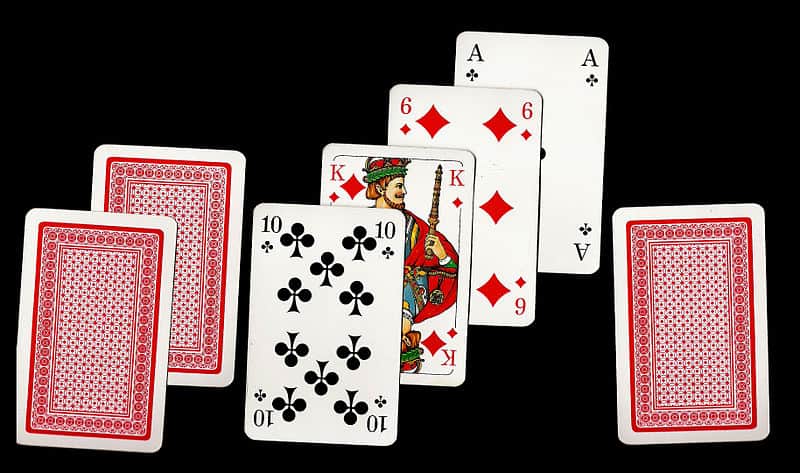

Chinese Poker Mastery: Rules, Strategy, and the Origins of This Unique Poker Variant
Chinese Poker, also known today in its most popular form as Open Face Chinese Poker (OFC), has emerged as a fascinating blend of simplicity and deep strategic complexity. Unlike the more widely known Texas Hold’em or Omaha, this variant doesn’t rely on betting rounds or community cards. Instead, Chinese Poker tasks players with arranging a hand of 13 cards into three separate poker hands, following specific ranking rules that make the game a unique mental challenge. It’s a game of puzzle-solving, risk-reward evaluation, and sharp card placement strategy.
The roots of Chinese Poker can be traced back several decades, believed to have been played among gamblers in Asia long before it gained global attention. Some credit the game’s rise to prominence in the early 1990s when it became a regular fixture in high-stakes poker rooms in Las Vegas and other casinos. Its appeal lies in its ability to be enjoyed by both seasoned poker professionals and complete novices. The lack of complex betting structures and the relatively simple ruleset mean anyone can start playing within minutes. Yet mastering the game is an entirely different journey.
At its core, Chinese Poker revolves around the concept of building three separate hands from a 13-card deal. Players must construct a bottom five-card hand, a middle five-card hand, and a top three-card hand. The challenge and the beauty—of the game lies in the hierarchy. The bottom hand must be the strongest, the middle slightly weaker, and the top the weakest of the three. Violating this rule by setting hands incorrectly is known as “fouling,” which results in an automatic loss for the round. This forces players to constantly weigh how to spread their cards to optimize all three hands simultaneously.
One of the features that has made Chinese Poker stand out is the introduction of “Fantasyland.” This exciting mechanic is triggered when a player sets a qualifying top hand—usually a pair of queens or better without fouling. Entering Fantasyland grants that player a huge advantage in the next round, as they receive all 13 cards face down at once and get to set their hands in private. This feature adds another layer of tension and anticipation, as players often take risks in pursuit of this elusive power play.
There are several recognized variations of Chinese Poker. Open Face Chinese Poker, the most widely played version today, involves players revealing their cards progressively rather than setting their entire hand at once. This adds a real-time strategic dynamic, where players must react to what others are playing as they build their hands. Another variant, known as Pineapple OFC, sees players being dealt more cards and discarding one before finalizing their hands. For those who enjoy high-level play, the Progressive Fantasyland format increases the difficulty and rewards, requiring stronger hands to qualify for Fantasyland with each round.
Strategy in Chinese Poker requires a blend of aggression and foresight. While there’s no betting, each decision can drastically impact the score. Players must manage their hands in a way that not only adheres to the hierarchy but also beats their opponents in at least two of the three hands. Experienced players often develop an intuitive sense for card placement, track opponents’ likely holdings based on exposed cards, and plan several steps ahead like a chess master maneuvering pieces across the board.
Online platforms have played a significant role in modernizing and popularizing Chinese Poker. Dozens of poker apps and real-money platforms now offer Open Face Chinese Poker, allowing players to compete globally in both casual and competitive environments. These platforms handle scoring automatically, track Fantasyland status, and often include timed play to keep the pace brisk and engaging.
What makes Chinese Poker truly special is its accessibility. It is just as suitable for a friendly home game as it is for high-stakes competition. The blend of luck, skill, and strategy appeals to a wide range of players, and the constant decision-making ensures no two games ever feel quite the same. For those who appreciate poker’s strategic side but want something that challenges the mind in a fresh, compelling format, Chinese Poker is an absolute must-try.
Whether you’re intrigued by its elegant mechanics, drawn to the suspense of building toward Fantasyland, or simply looking for a new card game to master, Chinese Poker stands apart from the crowd. It’s not just a variant—it’s a genre-defining experience that continues to evolve and thrill players around the world.
More for You:

Online Casino Verification in the UK: Why Casinos Ask for ID and Why Waiting Until You Withdraw Is Wrong
Online Casino Verification in the UK: Why Casinos Ask for ID and Why Waiting Until You Withdraw Is Wrong Online casino verification is one of those subjects where two things can be true at the same time. UK gambling companies have legitimate legal and regulatory reasons for knowing who their customers are. Casinos need to

Gonzo’s Quest 2: Return to El Dorado Slot Review | The Legendary Adventure Returns Bigger Than Ever
NetEnt Slots Gonzo’s Quest 2: Return to El Dorado Slot Review | The Legendary Adventure Returns Bigger Than Ever Some online slots become popular for a few months before quietly fading into history. Others change the industry forever. When NetEnt released the original Gonzo’s Quest back in 2011, it introduced players to the now-famous Avalanche

Gamesys Casinos Compared | Bally Casino, Virgin Games, Monopoly Casino and JackpotJoy
Gamesys Casinos Compared | Bally Casino, Virgin Games, Monopoly Casino and JackpotJoy When choosing an online casino, players are often faced with dozens of excellent brands that appear remarkably similar. They may share familiar game libraries, payment methods, promotions and even website layouts, making it difficult to understand which operator is best suited to their

Mega Casino Mobile Review | One of the Best Mobile Casino Experiences We Have Tested
Mega Casino Mobile Review | One of the Best Mobile Casino Experiences We Have Tested The way we play online casino games has changed dramatically over the last decade. While desktop gaming still has its place, millions of players now prefer the convenience of spinning the reels, joining live dealer tables or placing bets directly

Bally Casino Game Providers | The Software Studios Behind One of the UK’s Most Entertaining Online Casinos
Bally Casino Game Providers | The Software Studios Behind One of the UK’s Most Entertaining Online Casinos When choosing an online casino, many players naturally focus on welcome bonuses, free spins and promotional offers. While these can certainly provide an attractive introduction, they only represent a small part of the overall experience. At E-Vegas.com we

Mega Casino Bonuses Explained | Why the Promotions Make Mega Casino Even More Appealing
Mega Casino Bonuses Explained | Why the Promotions Make Mega Casino Even More Appealing At E-Vegas.com we have already taken an in-depth look at Mega Casino in our full review, exploring everything from its extensive game library and software providers through to its security, licensing, payment options and overall player experience. One of the key messages

Why Game Selection Matters | Welcome Bonuses Are Only The Beginning | How to Choose an Online Casino
Why Game Selection Matters | Welcome Bonuses Are Only The Beginning | How to Choose an Online Casino There is one question that we are asked more than almost any other here at E-Vegas.com. “What is the best online casino?” At first glance it sounds like a simple question, but the honest answer is that

Raging Rhino Slot Review | Stampede Across the African Savannah
Play Slots Raging Rhino Slot Review | Stampede Across the African Savannah If you enjoy online slots packed with wildlife, stunning graphics, exciting bonus features and thousands of ways to win, Raging Rhino remains one of the standout safari-themed slot games available today. Developed by WMS, now part of Light & Wonder, this iconic online slot transports
FAQ: Unraveling the Mysteries of Open Face Chinese Poker
1. What is Chinese Poker?
Chinese Poker is a poker variant where players are dealt 13 cards and must divide them into three hands: a five-card bottom hand, a five-card middle hand, and a three-card top hand. The goal is to beat opponents’ corresponding hands while adhering to the rule that the bottom must be the strongest and the top the weakest.
2. What’s the difference between Chinese Poker and Open Face Chinese Poker (OFC)?
In traditional Chinese Poker, players set all their hands at once and face them down. In OFC, players place cards face up one at a time, building hands gradually, which adds a layer of strategy and visibility.
3. How many players can play Chinese Poker?
The game is typically played with two to four players using a standard 52-card deck. With more than three players, cards may not be evenly distributed, or duplicate decks might be used.
4. How are the three hands ranked?
Standard poker hand rankings apply. The bottom hand (strongest) must beat the middle hand (medium strength), and the middle must beat the top hand (weakest). If not, the player “fouls” and loses the round.
5. What does it mean to “foul” in Chinese Poker?
A foul occurs when the hand hierarchy is incorrect—for example, when the middle hand is stronger than the bottom hand. Fouling results in an automatic loss for that round.
6. What is Fantasyland in Chinese Poker?
Fantasyland is a bonus round triggered when a player sets a strong top hand—usually a pair of queens or better—without fouling. The player then receives all 13 cards at once in the next round, gaining a significant strategic advantage.
7. Can you stay in Fantasyland for multiple rounds?
Yes, in variants like Progressive Fantasyland, you can re-enter or stay in Fantasyland if you meet more demanding hand requirements (e.g., three of a kind in the top hand or full house in the middle).
8. How is scoring done in Chinese Poker?
Players earn one point for each hand won against each opponent (top vs. top, etc.). Bonus points are often awarded for scooping (winning all three hands) or achieving strong hands in specific rows.
9. What is a scoop?
A scoop occurs when a player wins all three hands against an opponent. This usually earns extra points (commonly a 3-point bonus) on top of the standard score.
10. What is the best strategy when setting your hands?
The key is balance—ensuring the bottom is the strongest while giving your top and middle hands competitive power. Understanding your opponent’s likely moves and staying conservative with potential fouls is also crucial.
11. What are royalties or bonuses in Chinese Poker?
Royalties are extra points awarded for strong hands in any row—e.g., a straight flush in the bottom, full house in the middle, or trips in the top. Royalties vary by ruleset but can significantly impact scoring.
12. Is bluffing part of Chinese Poker strategy?
Not in the traditional sense, since there’s no betting. However, reading opponents and placing cards strategically to mislead or force mistakes adds a psychological element similar to bluffing.
13. Are flushes and straights allowed in the top hand?
No, because the top hand has only three cards. The highest-ranking hand possible in the top row is three of a kind, followed by pairs and high cards.
14. Can Chinese Poker be played online?
Yes. Many online platforms offer OFC and its variants. Online versions often include auto-scoring, Fantasyland tracking, and multiplayer options, making it easy to learn and compete.
15. Is Chinese Poker more luck or skill based?
While luck plays a role in the cards you’re dealt, long-term success in Chinese Poker relies heavily on strategy, card placement, and reading opponents, especially in Open Face variants.