The Gambler’s Fallacy: A Trap for the Unwary | Is Your Mind Playing You?
In the world of casino betting and gambling, where fortunes can change in an instant, the mind plays its own games. Among the most deceptive psychological traps is the Gambler’s Fallacy—a belief that seems logical on the surface but can derail even the most seasoned players. At E-Vegas.com, we strive to uncover the intricacies of gambling and share insights that help players stay level-headed and informed. The Gambler’s Fallacy, its origins, its impact, and its role in emotional pitfalls like tilt are all critical areas of understanding for anyone stepping up to the tables.
The Gambler’s Fallacy, sometimes called the Monte Carlo Fallacy, is a deeply ingrained cognitive bias. It’s the mistaken belief that the probability of a random event is influenced by the outcomes of preceding events. The classic example is a roulette player watching the ball land on black ten times in a row and assuming that red is now “overdue.” In truth, the odds remain unchanged, and each spin of the wheel is an independent event. This misunderstanding stems from a fundamental error in interpreting random sequences: the assumption that randomness must balance itself out within a short period, which is not how probability works.
This fallacy has a storied history, with its most famous occurrence unfolding at the Casino de Monte Carlo in 1913. On one fateful night, the roulette ball landed on black 26 consecutive times. Gamblers, convinced that red was inevitable, began betting heavily against black. As the streak continued, bets on red grew larger, fueled by an almost desperate certainty. When the ball finally landed on red after the 26th spin, the damage was done—millions of francs had been lost. The incident became a cautionary tale and gave the fallacy its nickname.
The Gambler’s Fallacy does not discriminate; it can ensnare anyone, from novice gamblers to high-stakes professionals. It manifests not only at roulette tables but across all forms of gambling and even in financial decision-making. Poker players, for instance, might believe they are “due” for a win after a string of losses, leading them to make reckless calls or bluffs. Sports bettors might assume a team is destined to win after a losing streak, ignoring the factors that actually influence performance. Even investors can fall prey to this fallacy, assuming that a stock’s value will rise after consecutive declines or drop after a series of gains.
The impact of the Gambler’s Fallacy is not limited to erroneous predictions; it can have a profound emotional effect. When players act on this bias and fail to achieve the expected outcome, frustration and anger can set in, leading to what is known as tilt. Tilt is a state of emotional distress that clouds judgment and often results in poor decisions. A player on tilt might chase losses, bet impulsively, or deviate from their strategy, compounding their mistakes and further depleting their bankroll.
Recognizing the signs of the Gambler’s Fallacy is the first step to avoiding its pitfalls. One telltale sign is an overreliance on past outcomes to predict future events. If you find yourself thinking, “It’s been red for so long, black must be next,” you’re likely falling into the trap. Another indicator is chasing losses, driven by the belief that a win is imminent. Emotional decision-making, marked by frustration or impatience, is another red flag.
To combat the Gambler’s Fallacy and its effects, players must adopt a disciplined and informed approach. Understanding the principles of probability is crucial; knowing that each event is independent helps dispel the illusion of patterns. Sticking to a well-defined strategy ensures that decisions are guided by logic rather than emotion. Setting limits on time and money spent at the tables can prevent the spiral of chasing losses. When emotions begin to take over, taking a break can provide the clarity needed to regain composure.
Staying cool at the tables requires a shift in mindset. Gambling should be viewed as a form of entertainment, not as a way to recover losses or achieve financial goals. Accepting that outcomes are random and beyond your control allows you to enjoy the experience without undue stress. At E-Vegas.com, we emphasize the importance of responsible gambling and maintaining a clear head, even in the heat of the moment.
The Gambler’s Fallacy is a powerful reminder of the mind’s ability to deceive itself. While it’s easy to fall prey to this bias, awareness and understanding are the keys to overcoming it. By recognizing the fallacy, avoiding tilt, and staying grounded, players can approach the tables with confidence and clarity. Remember, in the world of gambling, the only certainty is uncertainty, and the best way to play is with a cool head and a sound strategy.
You May Also Like:

Online Casino Verification in the UK: Why Casinos Ask for ID and Why Waiting Until You Withdraw Is Wrong
Online Casino Verification in the UK: Why Casinos Ask for ID and Why Waiting Until You Withdraw Is Wrong Online casino verification is one of those subjects where two things can be true at the same time. UK gambling companies have legitimate legal and regulatory reasons for knowing who their customers are. Casinos need to

Gamesys Casinos Compared | Bally Casino, Virgin Games, Monopoly Casino and JackpotJoy
Gamesys Casinos Compared | Bally Casino, Virgin Games, Monopoly Casino and JackpotJoy When choosing an online casino, players are often faced with dozens of excellent brands that appear remarkably similar. They may share familiar game libraries, payment methods, promotions and even website layouts, making it difficult to understand which operator is best suited to their

Mega Casino Mobile Review | One of the Best Mobile Casino Experiences We Have Tested
Mega Casino Mobile Review | One of the Best Mobile Casino Experiences We Have Tested The way we play online casino games has changed dramatically over the last decade. While desktop gaming still has its place, millions of players now prefer the convenience of spinning the reels, joining live dealer tables or placing bets directly

Mega Casino Bonuses Explained | Why the Promotions Make Mega Casino Even More Appealing
Mega Casino Bonuses Explained | Why the Promotions Make Mega Casino Even More Appealing At E-Vegas.com we have already taken an in-depth look at Mega Casino in our full review, exploring everything from its extensive game library and software providers through to its security, licensing, payment options and overall player experience. One of the key messages
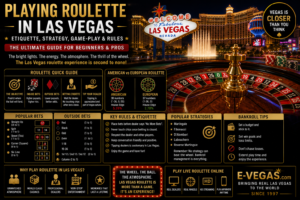
Playing Roulette In Las Vegas: Part 9 | Etiquette, Strategy, Rules & Complete Beginner Guide
“Vegas Is Closer Than You Think”? Playing Roulette In Las Vegas: Part 9 | Etiquette, Strategy, Rules & Complete Beginner Guide Las Vegas is the undisputed home of casino gambling. While roulette may have originated in France centuries ago, there is arguably nowhere on Earth where the game feels more exciting, more glamorous and more

Caesars Palace Las Vegas Live Streamed Roulette: Part 8 | Play Real Las Vegas Roulette Online From Anywhere In The World
Place Your Bets Caesars Palace Live Streamed Roulette: Part 8 | Play Real Las Vegas Roulette Online From Anywhere In The World Few casino names carry the same weight as Caesars Palace. For more than half a century, Caesars Palace has stood at the very heart of the Las Vegas Strip, welcoming everyone from first-time

Roulette At The Bellagio: Part 7 | Playing Live From One Of Las Vegas’ Most Famous Casinos Anywhere In The World
Play Live Roulette At The Bellagio: Part 7 | Playing Live From One Of Las Vegas’ Most Famous Casinos Anywhere In The World There are casino resorts in Las Vegas and then there is the Bellagio. For many visitors arriving on the Las Vegas Strip for the first time, the Bellagio represents everything they imagined

Playing European Vs American Roulette In Las Vegas Part 3: Which Wheel Offers Better Odds?
Play Live In Las Vegas Playing European Vs American Roulette In Las Vegas: Which Wheel Offers Better Odds? European Vs American Roulette In Las Vegas: Which Wheel Offers Better Odds? Roulette has been one of the defining games of Las Vegas for generations. From the glamorous casino floors of the Las Vegas Strip to the
FAQ: E Vegas Explains the Gambler's Fallacy
1. What is the Gambler’s Fallacy?
The Gambler’s Fallacy, also known as the Monte Carlo Fallacy, is the mistaken belief that the likelihood of a random event is influenced by past outcomes. For example, believing a roulette wheel landing on black multiple times means red is “due.”
2. Where did the term originate?
The fallacy gained its nickname from a famous 1913 event at the Casino de Monte Carlo, where the roulette wheel landed on black 26 times in a row, leading gamblers to lose heavily by betting on red.
3. How does the fallacy manifest in gambling?
Gamblers assume patterns in independent events, like believing a losing streak increases the likelihood of a win or that alternating outcomes must occur in games like roulette, poker, or slot machines.
4. Why is the Gambler’s Fallacy incorrect?
Each event in games of chance, such as a coin flip or roulette spin, is independent. The outcome of one event has no effect on subsequent outcomes, making patterns meaningless.
5. Who is most affected by the Gambler’s Fallacy?
It affects everyone, from casual gamblers to seasoned professionals, as well as investors and traders who assume trends in financial markets follow similar “balancing” rules.
6. What is tilt, and how is it related to the fallacy?
Tilt refers to emotional frustration or distress that clouds judgment. The fallacy can lead players to tilt when their expected outcomes don’t occur, causing irrational betting or decision-making.
7. How does the fallacy impact decision-making at the tables?
Players may chase losses, bet aggressively, or deviate from strategy, believing a win is “due.” This often leads to greater losses and poor financial decisions.
8. How can you avoid falling into the Gambler’s Fallacy?
Understand that each event is independent and that patterns in random outcomes don’t exist. Sticking to a clear strategy and taking breaks when frustrated can also help.
9. Does the fallacy only affect gamblers?
No, it extends to other areas, such as financial trading, sports betting, and even daily life, wherever people incorrectly link independent events to one another.
10. What is the key to staying cool at the tables?
Focus on enjoying the game rather than expecting outcomes. Maintain a disciplined strategy, recognize when emotions are influencing decisions, and understand the role of randomness in gambling.