Learn About & How to Play Thirty-One: A Fun and Strategic Card Game You Probably Never Heard Of?
Thirty-One, also known as “Scopone” in some regions, is a classic card game with a rich history that dates back around 500 years. It’s still enjoyed in many variations across Europe and is often compared to popular games like Cribbage and Blackjack. Known for its easy-to-learn rules and strategic depth, Thirty-One offers players the perfect blend of luck and skill, making it an exciting game for friends, family, and casino enthusiasts alike.
The Objective of the Game
In Thirty-One, the goal is to form a hand that totals 31 points in cards of a single suit. If no player achieves this, the player with the highest hand of any one suit wins at the showdown. It’s a game where both strategy and timing are crucial, as you’ll need to evaluate your cards carefully and decide when to make your move. Whether you’re going for the 31 points in a single suit or looking to outmaneuver your opponents with superior card values, each round is packed with excitement.
Card Values and Scoring
In Thirty-One, card values are simple but important to remember:
1. Ace (A): 11 points
2. Face Cards (K, Q, J): 10 points each
3. Number Cards (2–10): The card’s face value
For example, a hand with a 10, Jack, and Ace in the same suit totals 31 points and would automatically win the round. However, achieving 31 is rare, and much of the game revolves around getting as close to that target as possible while keeping an eye on the moves of your opponents.
The Deal
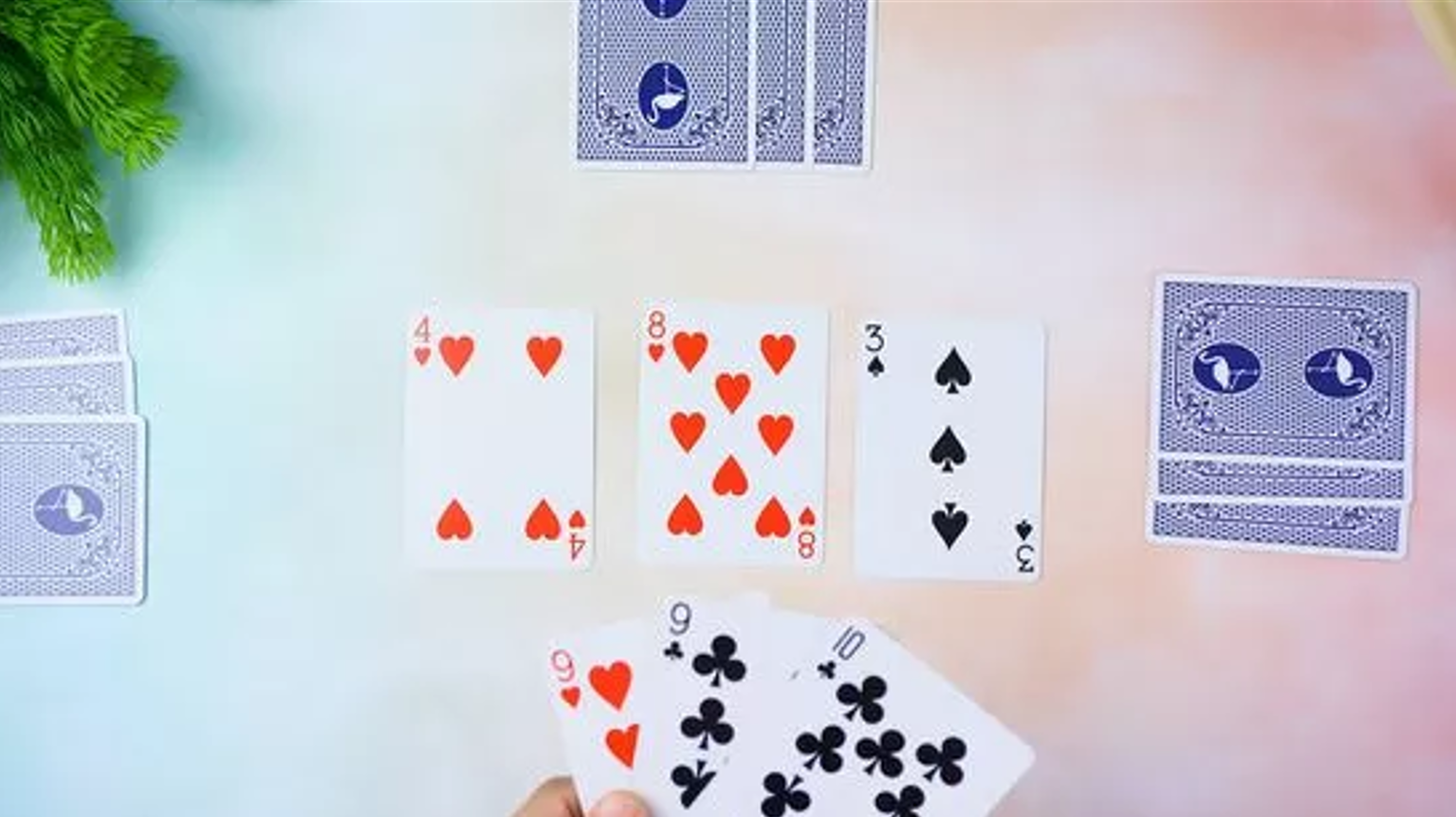
The game begins with players cutting for the deal, with the player holding the lowest card becoming the dealer. The deal rotates clockwise around the table after each hand. Three cards are dealt face-down to each player, and then three cards are placed face-up to form the “widow” (a shared pool of cards that players can exchange with).
How to Play Thirty-One
Each player starts by contributing chips to a pot. The dealer shuffles the deck and distributes the cards. On each player’s turn, they have the option to exchange one card from their hand with one card from the widow. This exchange is crucial, as it gives players the opportunity to improve their hand. Some variations allow players to exchange more than one card during their turn, increasing the strategic possibilities.
The game continues with players taking turns in a clockwise direction. After everyone has had a chance to exchange cards, players decide whether they want to “knock” — signaling that they believe their hand is strong enough to win the round. Once a player knocks, the other players get one final turn to exchange cards before the showdown. The showdown occurs when all players reveal their hands, and the player with the highest-valued hand of one suit wins the pot.
Winning the Pot
Winning is based on having the highest total value in one suit. If a player reaches exactly 31 points, they can knock immediately and win the pot. If two or more players are tied for the highest score, the player with the highest-ranking individual card wins. For example, a King, Queen, and 6 (totaling 26) would beat a Queen, 9, and 7 (also totaling 26) because the King outranks the Queen.
If there’s a tie at the highest card, the game continues comparing the next highest cards until a winner is determined. This ensures that even if two players have the same overall hand value, the winner is decided by the cards’ rank.
The Knock and Instant Win
If you manage to get exactly 31 points in one suit, you can knock right away to win the round. This is often a strategic moment where players need to be mindful of the pot and their opponents’ card values. Similarly, if a player knocks before any exchanges have taken place, the showdown happens immediately, and players reveal their hands without any further opportunity to improve them.
Starting the Next Hand
Once a player wins the pot, all players contribute chips for the next round, and the game continues. As the game progresses, the tension builds as players exchange cards, strategize their moves, and attempt to outplay each other. Because of its mix of luck and strategy, Thirty-One remains an enjoyable and competitive game, whether played casually among friends or in a more formal setting.
Variations of Thirty-One
There are many variations of Thirty-One, and different regions or groups may play with slight differences in the rules. Some of these include changing the number of cards dealt, allowing multiple exchanges per turn, or using different ways of scoring. However, the basic principles of aiming for 31 points in a suit, knocking, and competing for the highest hand remain the core of the game.
Why Play Thirty-One?
Thirty-One is a fun and engaging card game that’s perfect for small groups, making it ideal for family game nights or friendly gatherings. With easy-to-understand rules and the excitement of trying to hit 31 points in a suit, it’s a game that combines strategy with luck in a way that keeps players engaged throughout the game.
Whether you’re a casual player or looking for something new to add to your gaming repertoire, Thirty-One offers a thrilling challenge that will keep you on your toes. So, gather your friends, get your chips ready, and enjoy the fast-paced action of Thirty-One today!
Where to Next:

Learn About & How to Play Thirty-One: A Fun and Strategic Card Game you Probably Never Heard Of?
Learn About & How to Play Thirty-One: A Fun and Strategic Card Game You Probably Never Heard Of? Thirty-One, also known as “Scopone” in some regions, is a classic card game with a rich history that dates back around 500 years. It’s still enjoyed in many variations across Europe and is often compared to popular

Play Tight, But Aggressive: Mastering the Art of Poker Strategy
Play Tight, But Aggressive: Mastering the Art of Poker Strategy In the world of Poker, understanding the concept of playing tight, but aggressive is crucial to becoming a successful player. This strategy is often used by experienced professionals to maximize their potential winnings while minimizing their risk. So, what does it mean to “play tight,

How to Play Poker | The Ultimate Guide to Poker Basics
How to Play Poker | The Ultimate Guide to Poker Basics Poker is one of the most popular and thrilling card games globally, enjoyed in casinos, homes, and online platforms. Whether you’re a beginner or looking to sharpen your skills, learning the basics of how to play Poker is essential. In this guide, we’ll walk
The Mechanics of Shuffle Tracking & Ace Sequencing: How a Sharp Eye Can Create Thousands in Edge Play
The Mechanics of Shuffle Tracking & Ace Sequencing: How a Sharp Eye Can Create Thousands in Edge Play Card counting is often portrayed as the ultimate skill in blackjack advantage play, a route to winning big in the casino. For many, learning to count cards is a journey, one that involves mastering basic strategy, memorizing

Are There Skill-Based Games at an Online Casino? Understanding the Balance Between Luck and Strategy
Are There Skill-Based Games at an Online Casino? Understanding the Balance Between Luck and Strategy When people think of online casinos, the first thing that usually comes to mind is luck. Spinning reels, bouncing roulette balls, and flipping cards all seem to follow randomness. And to some extent, that’s true. Games like slots and roulette are

Mastering Live Dealer Blackjack: Advanced Strategies for Seasoned Players
Mastering Live Dealer Blackjack: Advanced Strategies for Seasoned Players Live dealer blackjack has become one of the most immersive ways to play online, offering the thrill of a real casino table with the convenience of digital access. For experienced players seeking to elevate their game, adapting to the live dealer format with advanced strategies is

How to Transition from Beginner to Intermediate in Blackjack and Where are the Lines That Makes the Difference
How to Transition from Beginner to Intermediate in Blackjack and Where are the Lines That Makes the Difference Blackjack is one of the most accessible and strategic card games in the casino, and for many players, the journey from beginner to intermediate is both exciting and rewarding. But this transition isn’t just about playing more

Split Pairs and Three-Flush Hands: Navigating Starting Hands in 7 Card Stud Poker
Slot Review: Bullion Bars Gold Collector by Inspired Gaming Split Pairs and Three-Flush Hands: Navigating Starting Hands in 7 Card Stud Poker Seven-Card Stud is a game that rewards strategic thinking and strong hand selection. Unlike Texas Hold’em poker, where community cards help define the strength of a starting hand, Stud requires players to evaluate
FAQ: Thirty-One: A Fun and Strategic Card Game
1. What is Thirty-One?
Thirty-One is a classic card game where the goal is to achieve a hand totaling 31 points in one suit or have the highest hand at the showdown.
2. How many players can play Thirty-One?
Thirty-One can be played by 2 to 5 or more players.
3. What is the objective of Thirty-One?
The goal is to either get a hand that totals 31 points in one suit or have the highest hand at the showdown in one suit.
4. What type of deck is used in Thirty-One?
A standard 52-card deck is used in the game.
5. How are the cards ranked in Thirty-One?
The rank of cards from highest to lowest is: Ace (A), King (K), Queen (Q), Jack (J), 10, 9, 8, 7, 6, 5, 4, 3, 2.
6. What are the point values of the cards?
Ace (A) = 11 points
Face cards (K, Q, J) = 10 points
Number cards (2-10) = Face value
7. How is the game dealt?
Players cut for the deal, and the lowest card deals. Three cards are dealt face down to each player, and three cards are dealt face-up as the “widow.”
8. What is the widow?
The widow consists of three face-up cards placed in the center for players to exchange cards from.
9. What is the first step in playing Thirty-One?
All players contribute an equal number of chips to the pot before the game starts.
10. How do players take turns?
Players take turns clockwise. On their turn, players may exchange one card from their hand with one from the widow.
11. Can players exchange multiple cards at once?
In some variations, players may exchange more than one card with the widow.
12. How does a player signal they are satisfied with their hand?
A player “knocks” on the table to signal that they are ready for the showdown.
13. What happens after a player knocks?
After one player knocks, all other players get one more turn to exchange cards before the showdown occurs.
14. What happens in a showdown?
Players reveal their hands, and the one with the highest total in one suit wins the pot.
15. Can a player win immediately?
If a player holds exactly 31 points in one suit, they can knock immediately and win the round.
16. What happens if there is a tie?
If two or more players have the same total, the player with the highest-ranking card wins.
17. How are ties broken if the highest card is also the same?
If the highest card is the same, the next highest card is compared, and so on, until a winner is determined.
18. What happens if no player has exactly 31 points?
The game continues until all players knock or the showdown occurs, with the highest hand winning.
19. Can players exchange cards before the first round of play?
Yes, if a player knocks before any exchanges have begun, a showdown occurs immediately without any exchanges.
20. What happens after a hand ends?
After the pot is won, all players contribute chips for the next hand.
21. Can the number of cards exchanged vary?
Yes, in some variations, players can exchange multiple cards, not just one.
22. Can the game be played with more than 5 players?
Yes, Thirty-One can be played with more than 5 players, although more than 5 may slow the game down.
23. What if I draw a card that doesn’t help my hand?
You can exchange it with the widow on your turn, hoping to improve your hand.
24. How long does each round of Thirty-One last?
Each round typically lasts until one player knocks, or a player hits exactly 31 points in a single suit.
25. How is the winning player determined?
The player with the highest value hand in one suit at the showdown wins the pot.
26. Are there any special rules for certain cards?
No, the Ace is always worth 11 points, and face cards are worth 10, while the number cards are valued at their face value.
27. Can I “knock” at any time?
You can knock when you feel confident that your hand is the highest, or if you have 31 points in one suit.
28. Do I have to knock immediately after reaching 31?
Yes, if you reach exactly 31 points in one suit, you can knock and end the round immediately.
29. Can I knock before seeing the widow?
In some versions of the game, you may knock before the first round of exchanges begins, causing an immediate showdown.
30. What happens if the widow runs out of cards?
In most cases, the widow is replenished at the beginning of each new round.
31. Can you play Thirty-One with a modified deck?
Yes, some versions of Thirty-One play with fewer cards or specialized decks, depending on house rules.
32. Is there any strategy to playing Thirty-One?
Yes, you should evaluate the cards in your hand carefully, time your knock wisely, and consider what cards your opponents are exchanging.
33. What is a “knock” in Thirty-One?
A knock is when a player signals they are satisfied with their hand and are ready to end the round and compare hands.
34. Can I win the pot without knocking?
Yes, if you get exactly 31 points in one suit, you can win without having to knock.
35. How do I keep track of the points?
Players must mentally calculate their hand’s total based on the points for each card in one suit.
36. Can I change the number of cards dealt?
Yes, in some variations, the number of cards dealt can be adjusted depending on house rules.
37. Do I have to declare my hand at the showdown?
Yes, all players reveal their hands during the showdown to compare totals.
38. Is Thirty-One a game of skill or luck?
Thirty-One combines both skill and luck. While strategy plays a big role in card exchanges, the luck of the draw is also a factor.
39. What’s the best strategy for winning Thirty-One?
Focus on forming a strong hand early, be cautious when knocking, and pay attention to what other players are doing.
40. What if my opponent knocks before me?
If your opponent knocks, you get one final chance to exchange cards before the showdown.
41. Can I play Thirty-One with more than one deck of cards?
Typically, only one deck is used, but multiple decks could be used if more than 5 players are involved.
42. Knock knock who is there, who is there doctor. doctor who?
Doctor Who. Haha got you didn’t it.
43. What happens if I don’t have enough chips for the pot?
If a player cannot contribute chips, they may be forced to sit out that round, depending on the house rules.
44. Can I exchange cards with any other player?
No, players can only exchange cards with the widow, not with other players.
45. How do I determine who wins in case of multiple players with 31 points?
In the unlikely event of two players having exactly 31 points, the game typically goes to the player with the highest-ranking card.
46. What is the “house” in Thirty-One?
In casual play, there is usually no house, but in casino-style games, the house takes a small cut of the pot.
47. Can I change suits after a card exchange?
No, the cards exchanged will still count toward your current suit total. You cannot switch suits mid-round.
48. What happens if the deck runs out of cards during play?
The deck is reshuffled at the start of each new round if there are any cards remaining.
49. Is there a limit to how many chips you can win in Thirty-One?
There’s no strict limit, but the pot’s size depends on the number of players and the chips contributed.
50. Can I play Thirty-One online?
Yes, Thirty-One can be found in various online casino platforms or as a mobile app.
51. What is the best way to learn Thirty-One?
The best way to learn is to play with friends or family, familiarize yourself with the rules, and charicteristics of the game like knocking, practice strategic card exchanges and knocking to master the game.