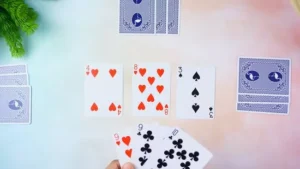
Play Tight, But Aggressive: Mastering the Art of Poker Strategy
In the world of Poker, understanding the concept of playing tight, but aggressive is crucial to becoming a successful player. This strategy is often used by experienced professionals to maximize their potential winnings while minimizing their risk. So, what does it mean to “play tight, but aggressive”?
First, let’s break it down. Playing tight means that you’re selective about the hands you play. Instead of jumping into every pot, you focus on playing only the stronger hands. This allows you to avoid costly mistakes that come from trying to play weak hands or stretching your chances with mediocre cards. By doing so, you decrease the likelihood of getting caught in difficult situations, and your chips are better preserved for hands that have the potential to win.
On the other hand, playing aggressive means betting and raising when you have a strong hand. This doesn’t mean blindly throwing chips into the pot, but rather taking charge of the action when the odds are in your favor. By making aggressive bets, you force your opponents to make difficult decisions, which often leads to them folding weaker hands or playing into your strengths. This approach maximizes the value of your strong hands, putting pressure on your opponents and limiting their opportunities to take control of the game.
When you combine these two strategies—playing tight and aggressive—you end up with a formula that maximizes your profitability. You only play hands that have a good chance of winning, and when you have those hands, you act decisively, pushing for as many chips as possible. This strategy also allows you to control the flow of the game, forcing your opponents to play according to your terms.
The Power of Bluffing: A Crucial Element in Poker
Bluffing is one of the most thrilling aspects of Poker. The very idea of deceiving your opponents into thinking you have a better hand than you do adds a psychological layer to the game that makes it fascinating. However, bluffing is not a tool to be used recklessly. It requires strategy, timing, and a deep understanding of your opponents.
At its core, bluffing involves convincing your opponents to fold superior hands by betting or raising in a way that makes them believe you have a stronger hand than they do. If done correctly, bluffing can be incredibly rewarding, allowing you to win pots you otherwise wouldn’t have. But when done poorly, bluffing can lead to heavy losses and put you in a vulnerable position.
The key to effective bluffing lies in knowing when to bluff and, just as importantly, when not to. Successful bluffs are often built on the foundation of a tight-aggressive strategy. When you have a reputation for playing strong hands and betting aggressively, your bluffs are more likely to be believed. If you are constantly bluffing without any substance to back it up, experienced players will catch on, and your bluffs will become predictable and easy to exploit.
Timing is critical when it comes to bluffing. Bluff when the board shows cards that suggest your hand could be strong. For example, if the community cards make a straight or flush possible, you can use that to represent that you’re holding those hands. The more your bluff matches the situation, the more likely your opponents are to fold. Similarly, consider your position at the table—bluffing early in a hand can be dangerous because there are still many players to act. Bluffing late in a hand, especially when fewer players remain, gives you a much higher chance of success.
Also, remember that bluffing is more effective against tight players who tend to fold weaker hands. Bluffing against loose players who call almost every bet, regardless of their hand strength, is often a waste of chips. Learning to read your opponents and adjust your play accordingly is essential to making bluffing a successful part of your game.
One of the most classic examples of bluffing is the “semi-bluff.” This occurs when you bet or raise with a hand that is not yet the best, but it has the potential to improve to a winning hand. For instance, you might have a flush draw, and you bet aggressively as though you already have the flush. If an opponent folds, you win the pot immediately, and if they call, you still have the chance to improve your hand on the turn or river.
In the end, bluffing is not about trying to fool everyone all the time. It’s about using the right situations to your advantage, leveraging the power of perception and forcing your opponents to second-guess themselves. Bluffing should always feel like an art rather than a trick. It’s about creating doubt in the minds of your opponents and using that doubt to gain control of the hand.
Combining Tight-Aggressive Play with Strategic Bluffing
When you combine the tight-aggressive strategy with well-timed bluffing, you create a powerful blend that can dominate the table. Your opponents will recognize that you only play strong hands, so when you do decide to bluff, they’re more likely to believe it. As a result, your aggressive betting with real strong hands will be more profitable because your opponents won’t know if you’re holding the nuts or bluffing. This uncertainty puts them at a huge disadvantage and allows you to dictate the flow of the game.
Mastering this combination of playing tight and bluffing strategically will elevate your Poker game. It’s a delicate balance, and when you get it right, you’ll find yourself outplaying your opponents both with the strength of your hands and with the deception of your bluffs. The key is always to stay observant, adaptable, and patient—knowing when to make your move and when to let your opponents make theirs.
Poker is a game of skill, strategy, and psychology, and with these tactics in your arsenal, you’ll be better equipped to read the table, make powerful moves, and win more pots.
Where to Next:

Learn About & How to Play Thirty-One: A Fun and Strategic Card Game you Probably Never Heard Of?
Learn About & How to Play Thirty-One: A Fun and Strategic Card Game You Probably Never Heard Of? Thirty-One, also known as “Scopone” in some regions, is a classic card game with a rich history that dates back around 500 years. It’s still enjoyed in many variations across Europe and is often compared to popular

The Highs, Lows, and Future of Poker: From Millionaires to Modern Streams | E-Vegas Explores
The Highs, Lows, and Future of Poker: From Millionaires to Modern Streams | E-Vegas Explores Poker has long captured imaginations worldwide — a game of skill, chance, and nerve that can create millionaires overnight and teach harsh lessons in humility just as quickly. The lives of poker millionaires are a study in contrasts: yachts moored
The Mechanics of Shuffle Tracking & Ace Sequencing: How a Sharp Eye Can Create Thousands in Edge Play
The Mechanics of Shuffle Tracking & Ace Sequencing: How a Sharp Eye Can Create Thousands in Edge Play Card counting is often portrayed as the ultimate skill in blackjack advantage play, a route to winning big in the casino. For many, learning to count cards is a journey, one that involves mastering basic strategy, memorizing

The Ultimate Expert Blackjack Strategy Guide Step-by-Step
The Ultimate Vegas Expert Blackjack Strategy Guide Step-by-Step Blackjack is one of the few casino games where a skilled player can actually gain a long-term edge over the house. Unlike slots or roulette, where the outcomes are purely based on luck, blackjack combines probability, psychology, and strategic thinking. The beauty of the game lies in

How to Transition from Beginner to Intermediate in Blackjack and Where are the Lines That Makes the Difference
How to Transition from Beginner to Intermediate in Blackjack and Where are the Lines That Makes the Difference Blackjack is one of the most accessible and strategic card games in the casino, and for many players, the journey from beginner to intermediate is both exciting and rewarding. But this transition isn’t just about playing more

What is One Casino Game Where if Played Correctly Players Can Have an Advantage Over the House
What is One Casino Game Where if Played Correctly Players Can Have an Advantage Over the House Most casino games are designed to ensure that the house always has the upper hand. Slot machines, roulette, baccarat, and even craps all favor the casino in the long run, making it nearly impossible for players to consistently

Live Dealer Blackjack or RNG? How to Choose the Best Blackjack Format Based on Your Playing Style
Live Dealer Blackjack or RNG? How to Choose the Best Blackjack Format Based on Your Playing Style Online blackjack players have two primary options when playing for real money: live dealer blackjack and standard RNG (Random Number Generator) blackjack. Both offer exciting gameplay, but the experiences are quite different. Live dealer games bring an authentic

Advanced Blackjack Tactics: How Surrendering Can Save Your Bankroll and Reduce Losses
Advanced Blackjack Tactics: How Surrendering Can Save Your Bankroll and Reduce Losses Blackjack is one of the few casino games where players can make strategic decisions that directly impact their long-term profitability. While hitting, standing, doubling down, and splitting are the most commonly used actions, surrendering is an often-overlooked strategy that can save money in
FAQ: Tight But Agressive Poker Play
1. What does “tight, but aggressive” mean in poker?
Tight-aggressive (TAG) means being selective about the hands you play while betting or raising aggressively when you have strong cards.
2. Why is playing tight important in poker?
Playing tight ensures you’re only involved in hands with a good chance of winning, which minimizes losses and protects your chips.
3. What does playing aggressively mean in poker?
Aggressive play means betting and raising when you have a strong hand to force opponents to make difficult decisions, increasing your potential for big wins.
4. How do tight and aggressive play complement each other?
Tight play ensures you only enter good hands, and aggressive betting maximizes value when you do. This combination forces opponents to play cautiously, benefiting you.
5. Can tight-aggressive players bluff?
Yes, tight-aggressive players can bluff. Since they only play strong hands, their bluffs are more believable and can put pressure on opponents to fold.
6. When should I bluff in poker?
Bluff when the board suggests you could have a strong hand, such as a potential straight or flush, and when the situation gives you an advantage.
7. What is a “semi-bluff” in poker?
A semi-bluff is when you bet or raise with a hand that isn’t yet the best, but could improve to a winning hand, such as a flush draw.
8. Why is bluffing important in poker?
Bluffing adds a psychological element to poker, helping you win pots even when your hand isn’t the best. Done correctly, it can earn you significant profits.
9. When is bluffing most effective in poker?
Bluffing is most effective when your opponents are tight and fold weaker hands. It’s also more successful when fewer players are left in the hand.
10. What makes a good poker bluff?
A good bluff is one that aligns with the situation. If the community cards suggest you have a strong hand, your bluff is more likely to be believed.
11. How do I spot if someone is bluffing?
Look for patterns in their betting behavior. If a player suddenly bets big in a situation where they likely don’t have a strong hand, they could be bluffing.
12. Should I bluff against loose players?
Bluffing against loose players is generally not advisable, as they tend to call almost any bet, regardless of their hand strength.
13. How do I control the flow of the game with tight-aggressive play?
By playing tight, you minimize the risk of losing chips. Aggressive betting forces opponents to react to your moves, giving you control over the game.
14. What is the “value bet” in poker?
A value bet is a bet you make when you believe you have the best hand and want to extract the maximum amount of chips from opponents.
15. How does position affect tight-aggressive play?
Your position at the table impacts how you play your hands. Playing tight and aggressive from early positions requires more caution, while late positions give you more flexibility.
16. How do I balance tight-aggressive play with risk?
While tight-aggressive play reduces unnecessary risks, it still allows you to make well-timed bets and raises when you have strong hands, maximizing potential rewards.
17. What role does table image play in poker?
A strong table image, built by consistently playing tight-aggressive, increases the effectiveness of your bluffs and value bets, as opponents respect your betting patterns.
18. Can tight-aggressive play be used in tournaments?
Yes, tight-aggressive play works well in tournament poker, especially during the early stages when conserving chips is essential.
19. How can I improve my tight-aggressive strategy?
Focus on being selective with your hands, raise with good hands, and incorporate well-timed bluffs. Pay attention to your opponents’ tendencies.
20. What are common mistakes in tight-aggressive play?
Over-folding too often, being too predictable with bets, and misjudging when to bluff are common mistakes in tight-aggressive play.
21. What is the best hand to play aggressively?
Premium hands like high pocket pairs (Aces, Kings) and strong suited connectors are ideal for aggressive play.
22. What are the risks of playing too tight?
Playing too tight can make you predictable and allow opponents to dominate the game by taking control of pots you might have entered.
23. How do I read opponents while playing tight-aggressive?
Pay attention to their betting patterns, reactions, and body language to gauge the strength of their hand and adjust your play accordingly.
24. Should I adjust my tight-aggressive strategy during the game?
Yes, adjust your strategy based on the behavior of your opponents. If they are becoming too cautious or aggressive, tailor your play to exploit their tendencies.
25. What is the best way to use aggression in poker?
Aggression should be used strategically—bet and raise with strong hands to force opponents to make tough decisions and take control of the pot.
26. How do I avoid being predictable while playing tight-aggressive?
Mix up your play by occasionally limping or slow-playing strong hands to confuse your opponents and keep them guessing.
27. What is a “tight player” in poker?
A tight player only enters pots with strong hands, avoiding weaker hands that could lead to costly mistakes.
28. What is an “aggressive player” in poker?
An aggressive player frequently raises and bets rather than calling, putting pressure on opponents and controlling the flow of the game.
29. How do I exploit aggressive opponents?
If you’re playing tight-aggressive, you can exploit aggressive players by letting them bluff into you and calling them with stronger hands.
30. What are “pot odds” in poker?
Pot odds refer to the ratio of the current size of the pot to the cost of a contemplated call. Understanding pot odds helps you make more informed decisions.
31. How does aggression help with pot control?
Aggressive play helps you take control of the pot by forcing opponents to fold or call with weak hands, giving you the upper hand.
32. What is a “cold call” in poker?
A cold call occurs when you call a raise from another player rather than re-raising yourself. This is more common in loose play than tight-aggressive strategies.
33. How do I read my opponent’s betting patterns?
Look for consistent patterns, such as frequent large bets or small bets, which can give you clues about their hand strength.
34. What are the key benefits of tight-aggressive play?
The main benefits are minimizing losses, controlling the flow of the game, and increasing your profitability through well-timed bets and bluffs.
35. How do I avoid being bullied by aggressive players?
Respond by playing tighter and only entering pots with strong hands, then make aggressive moves when you have the edge.
36. What is a “C-bet” in poker?
A C-bet, or continuation bet, is when you bet on the flop after being the pre-flop raiser, regardless of whether you hit the board. It’s an aggressive strategy often used by tight players.
37. What are some signs that an opponent is playing tight?
Tight players tend to only raise with premium hands and rarely enter pots unless they have strong starting hands.
38. How do I play against a tight-aggressive opponent?
To beat a TAG player, you need to adjust by playing back with hands that have good post-flop potential and forcing them to play difficult decisions.
39. What is the best way to bluff against tight players?
Bluffing against tight players can work well when they show weakness. Use semi-bluffing to make them fold hands that aren’t strong enough to challenge you.
40. Can tight-aggressive play be used in cash games?
Yes, tight-aggressive play is effective in cash games, as it reduces the risk of significant losses while maximizing the potential for profit.
41. How important is patience in tight-aggressive play?
Patience is crucial—waiting for the right hands to play and carefully choosing when to be aggressive maximizes your chances of success.
42. What’s the difference between tight-aggressive and loose-aggressive play?
Tight-aggressive involves playing fewer hands but betting aggressively with strong hands, while loose-aggressive involves playing many hands and betting aggressively with weaker hands.
43. How do I make the most of my strong hands using tight-aggressive play?
By raising aggressively, you can increase the pot size and pressure your opponents to fold weaker hands, allowing you to extract more value from strong hands.
44. Is tight-aggressive play suitable for all poker variants?
Tight-aggressive play works well in most variants, but may need slight adjustments for games like Omaha or Seven Card Stud, where hand combinations are different.
45. What is the “gap concept” in poker?
The gap concept refers to the idea that to enter a pot after a tight player has raised, you need a stronger hand to justify the call.